Conference Day One: Monday, 11 November 2019
8:00 am - 8:30 am
Registration, refreshments and coffee
8:30 am - 8:35 am
IQPC welcome remarks
8:35 am - 8:45 am
ASHRAE Cairo Chapter welcome remarks
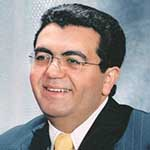
Dr. Mahmoud Fouad -
Vice President Elect & SAC Chair,
ASHRAE Cairo Chapter
Dr. Hesham Sefwat - President, ASHRAE Cairo Chapter

8:45 am - 9:00 am
Chairman’s welcome remarks Sustainable District Cooling & Heating Systems: An Overview
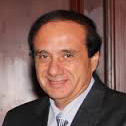
Dr. Ayman Mosallam -
Founding Member,
Egyptian Green Building Council

REGULATORY ASPECTS
Global demand for air-conditioning is expected to triple over the next 30 years and a lion’s share of this demand will be contributed by district cooling (DC) technologies. DC can be very sustainable and energy efficient, however the right regulations are needed to help understand specifications
9:00 am - 9:40 am
Keynote VIP Panel: The future of district cooling in Egypt
Dr. Alaa Olama -
Head Consultant & Head of the Permanent Committee,
EGYPRA, Egyptian District Cooling Code
Dr. Essam Khalil - President, Chairman, National HVAC Committee of Egypt, Arab Air Conditioning Code Committee, Consulting Engineering Bureau (CEB)
Dr. Mahmoud Fouad - Vice President Elect & SAC Chair, ASHRAE Cairo Chapter
Dr. Hesham Sefwat - President, ASHRAE Cairo Chapter
Dr. Ayman Mosallam - Founding Member, Egyptian Green Building Council
Are we getting there?
With 250,000 tonnes to 400,000 tonnes of district cooling requirements in Egypt for the next few years, this is rapidly changing the dynamics of the market. Explore the pivotal needs in establishing district cooling business models, the main drivers, the market growth and enormous potential for district cooling projects in Egypt.
Key points of discussion:
- Get introduced to the new Egyptian DC code of 2019
- How can investment be accelerated in low-carbon and climate-resilient district energy systems?
- Tri-generation technologies: What are we waiting for?
- Integrating urban systems with district cooling technologies
- What are the key challenges in replacing HVAC with district cooling
Distinguished VIP Panellists:
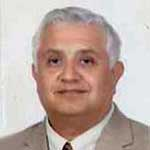
Dr. Alaa Olama
Head Consultant & Head of the Permanent CommitteeEGYPRA, Egyptian District Cooling Code

Dr. Essam Khalil
President, ChairmanNational HVAC Committee of Egypt, Arab Air Conditioning Code Committee, Consulting Engineering Bureau (CEB)
9:40 am - 10:10 am
The highly-awaited regulations are here! Releasing the new district cooling code regulations for Egypt 2020
Dr. Alaa Olama -
Head Consultant & Head of the Permanent Committee,
EGYPRA, Egyptian District Cooling Code
With Egypt having planned 4th generation smart cities to decongest, there is a need to regulate the district cooling regulations.
What will change?
- The role of EGYPRA, other regulators and the impact all of district cooling projects in Egypt
- What are the expected specifications of energy efficiency on?
- Non-compliance penalties on vendors, developers, consultants and contractors
Dr. Alaa Olama
Head Consultant & Head of the Permanent CommitteeEGYPRA, Egyptian District Cooling Code
ENERGY EFFICIENCY AND REAL-TIME MONITORING
With projects such as the New Cairo Stage 3 development, West Shurooq City, Suez Canal Development City, Al Amin City all embracing district cooling technologies, the key to its success will be effective real-time energy monitoring with the right metering systems. The transformation from HVACR to DC depends a lot on real-time monitoring and the use of low emission GWP refrigerants to achieve a certain level of sustainability.
10:10 am - 10:40 am
Identifying the advantages of effective modern metering systems
Energy efficiency can be better driven by installing modern energy smart meters that can give a real-time update on the energy units consumed by cooling systems.
What are the key advantages of modern cooling energy meters and its impact on the grid efficiency?
- Benchmarking allows users to compare the energy efficiency of one building or application
- Real-time monitoring of the electrical distribution asset management
- Bill auditing and shadow metering
10:40 am - 11:00 am
Speed networking
11:00 am - 11:30 am
Speed networking
11:30 am - 12:00 pm
How can district cooling be combined with solar systems to improve the electric load curve
Mohamed Selim -
Managing Director - Extra High Voltage Research Center,
Egyptian Electricity Holding Company
The electric daily load curve of Egypt and energy prices are important aspects that need to be considered while planning central cooling plants.
An important source of energy is the solar power.
But are we tapping this enough?
- The estimated air conditioning loads and energy simulated to the electric production
- District cooling solar system and complimentary components and energy saving
- New modern cities to consider the new contribution of the district cooling solar applications

Mohamed Selim
Managing Director - Extra High Voltage Research CenterEgyptian Electricity Holding Company
DISTRICT COOLING OF LARGE PLANTS
With the first contract signed for the central cooling station in the new administration capital in Cairo, this is a step forward to rationalise energy consumption. Using software and hardware interrupt systems, this is something that the government, developers, consultants and contractors are all looking forward to achieve Egypt’s futuristic vision. With massive upcoming projects in Cairo, Alexandria, Giza and Sharm El Sheikh, the stage is set for Egypt to use DC to achieve energy efficiency
12:00 pm - 12:30 pm
Optimising designs for large cooling plants using engineering simulation
A modern day approach is to optimising the performance of large capacity cooling plants using dispersion modelling.
How can engineering simulation models help?
- Discussing large capacity cooling plants (>100,000 TR)
- Optimising layout of cooling towers
- Minimising interference patterns
12:30 pm - 1:00 pm
Delivering, installing, operating and managing DC plants for mega development projects
Dr. Essam Khalil -
President, Chairman,
National HVAC Committee of Egypt, Arab Air Conditioning Code Committee, Consulting Engineering Bureau (CEB)
District cooling can be a complex array of parts connected to a central cooling station. With this introduction in Egypt, developers, consultants, contractors and vendors need to work together.
What are the key aspects?
- Managing the on-site logistics effectively to ensure the DC project is delivered on time and within budget, in order to serve the entire community
- Providing system reliability through emergency generators and backup cooling units
- Utilising Treated Sewage Effluent (TSE) to supply the cooling towers
Dr. Essam Khalil
President, ChairmanNational HVAC Committee of Egypt, Arab Air Conditioning Code Committee, Consulting Engineering Bureau (CEB)
1:00 pm - 1:30 pm
Networking lunch
PIPING AND CO-GENERATION
Piping is a very important factor during co-generation of energy. Co-generation plants can help achieve thermal efficiencies of over 80% thus contributing directly to energy efficiency
2:00 pm - 2:30 pm
Evaluating the development of plastic pre-insulated pipes for district cooling and HVAC systems
Even in district cooling plants, there is a possibility of energy leakage especially from pipes. This happens due to non-insulation of pipes or using cheap quality insulation.
How should you evaluate pipes?
- Understanding the impact of pre-insulated pipes for district cooling
- Benefits of using high density polyethylene pipe as core and jacket pipes
2:30 pm - 3:00 pm
The feasibility of producing and reusing water through desalination, waste heat, treated groundwater and Treated Sewage Effluent (TSE) processes
Capital expenditure of using fresh water for cooling is high. Egypt’s geography of coasts and remote hostile terrain makes it difficult to use fresh water each time for cooling.
How can sea-water and waste water be treated to use in cooling techniques?
- Assessing the energy-efficiency of each option depending on where the DC plant is located and intended use for the development
- Examining the future of DC plants in non-coastal areas and cost comparisons
- Considering the capital, operational and maintenance costs of each process of producing water
THE BIG DEBATE
With new developments in Egypt pushing for district cooling, the big question is that what will happen to the existing HVACR systems? Variable refrigerant frequency (VRF) cooling is an effective way to manage peak load consumption but with central cooling stations being planned all across Egypt, how valuable with VRF continue to be in Egypt?
3:00 pm - 3:40 pm
VRF versus district cooling – what are you choosing?
Eng. Mohamed Heider -
Mechanical Design Manager,
Shaker Consultancy Group
Eng. Mamdouh Abdoulkader - Vice President & GM, ASHRAE, Integrated Projects & Engineering Services Co. (IPEC)
Dr. Ibrahim El-Sharkawy - District Cooling Specialist - Energy Resources Engineering Department, Egypt-Japan University of Science and Technology (E-JUST)
Dr Hatem Sadek - Head of Mechanical Sector, Syndicate of Engineers
Dr. Ayman Rasekh - CEO, SolarSol Egypt
Dr. Ayman Mosallam - Founding Member, Egyptian Green Building Council
As much as the world is moving towards district cooling and rightly so, can Egypt afford a 50% increase in using potable water? Also with the new cities coming in Egypt, the construction of villas has increased than high rises. Traditionally villas with VRF installed HVAC systems have generated lower energy than a community of villas with district cooling.
What should be the solution?
- Choose it yourself: District cooling in villas versus variable refrigerant flow in villas
- Water shortage: How can this be tackled?
- Costs: With no electricity subsidies from 2020 and a 50% increase expected in water consumption, does moving to district cooling still help reduce energy bills?
- How can solar energy contribute to energy savings?
Panellists:
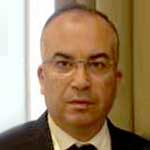

Eng. Mamdouh Abdoulkader
Vice President & GMASHRAE, Integrated Projects & Engineering Services Co. (IPEC)

Dr. Ibrahim El-Sharkawy
District Cooling Specialist - Energy Resources Engineering DepartmentEgypt-Japan University of Science and Technology (E-JUST)